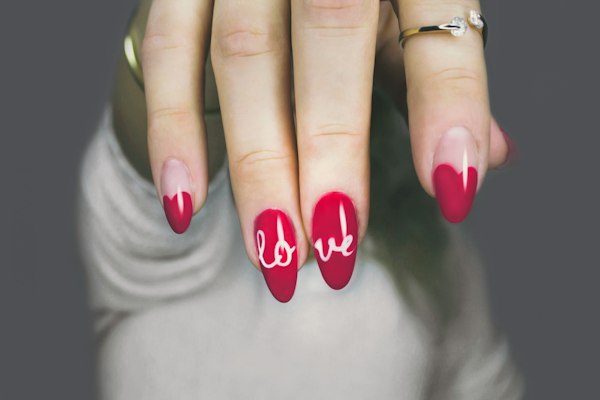
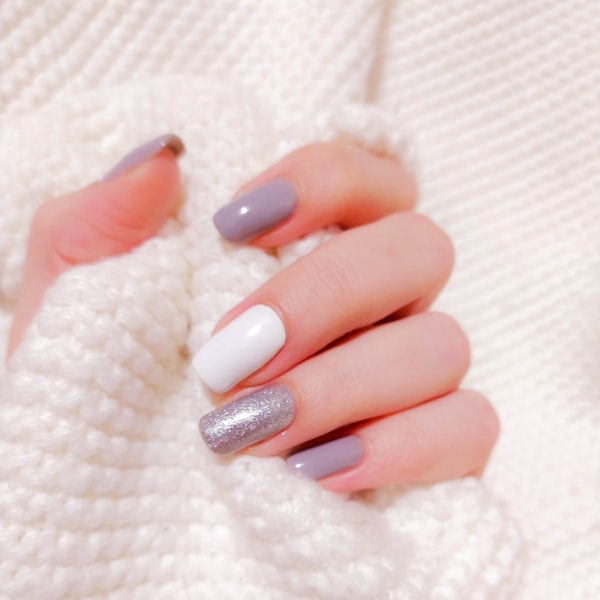
Ask anyone who has gotten her nails done a week before a wedding and she'll tell you the real test doesn't happen in the salon chair. It happens three days later, somewhere between a humid train commute, a full day of cooking for a function, and catching your acrylic tip on a door latch. Nails in India don't just need to look good under salon lighting. They need to survive monsoon humidity, 40 degree summers, dishwashing, mehndi season, pooja rituals, and back to back wedding functions in the same week.
So which actually holds up: press-on nails, gel, or acrylic? Here's an honest breakdown based on how each behaves in Indian conditions, and what it really costs over a year, not just for one event. What each one actually is
Acrylic nails are built by mixing a liquid monomer with a powder polymer, applied over your natural nail or a form, then shaped and filed. No UV lamp involved, it hardens through a chemical reaction, which is why old-school parlours could offer acrylics long before LED lamps became standard equipment. Acrylic gives the most length and strength, and also the most damage if it's filed off carelessly.
Gel nails are cured under UV or LED light in thin layers, giving a glossy, natural finish. Builder gel overlays add strength without much bulk. Gel is gentler to remove than acrylic when done properly, though it still involves filing the top layer and soaking in acetone.
Press-on nails are pre-shaped tips you apply yourself with adhesive tabs or nail glue. No lamp, no monomer smell, no ninety minutes in a chair. You size them to your nail bed, glue or tab them on, and you're done in under fifteen minutes. How Indian weather actually changes the answer
This is where most comparison articles online get it wrong. They're written for climates without a four month monsoon or coastal humidity touching 90 percent. Two things matter here that generic guides skip: humidity and heat cycling.
High humidity interferes with adhesion before you've even started. Moisture sitting on the nail plate during application weakens the bond, whether that bond is gel curing under a lamp or glue drying on a press-on. This is exactly why lifting complaints climb during monsoon months in cities like Mumbai, Chennai, and Kolkata. Salons that actually work in tropical climates adjust their prep with extra dehydrator or primer passes, a step a rushed local parlour sometimes skips.
Heat cycling is the second, very Indian problem. You step out of a 40 degree afternoon into an 18 degree air conditioned office, then back out again by evening. That constant expansion and contraction stresses whatever is bonded to your nail. Gel and acrylic, being rigid coatings, absorb most of that stress. A press-on that lifts slightly at the edge can be pressed back down or reapplied at home. A gel set lifting at the cuticle usually means a trip back to the salon.
None of this means gel or acrylic can't work in India. Plenty of women wear both successfully for years. It means climate adds a variable most global comparison content ignores entirely, and it should weigh more in your decision than the finished photos on Instagram do. The real cost, in rupees, not just per visit
A single visit price is misleading because it hides what maintenance actually costs over a few months.
Acrylic at most Indian salons runs Rs. 800 to Rs. 2,500 for a full set, local parlours at the lower end, premium salons higher. Refills every two to three weeks add another Rs. 500 to Rs. 1,500. Keep acrylics on continuously for a year and you're realistically looking at Rs. 8,000 to Rs. 18,000, sometimes more in metro salons, before any nail art add-ons.
Gel follows a similar pattern, usually Rs. 800 to Rs. 2,000 for a set and Rs. 500 to Rs. 1,500 for refills every two to three weeks. Annual cost lands in a comparable range to acrylic.
Press-on nails change this equation completely. A decent set online starts under Rs. 500 and goes up to Rs. 1,500 to 3,000 for handmade, reusable designs. Because a well cared for set can be reused several times, and because you only wear them when you actually need them, a full year of press-ons for someone dressing up for functions and events, rather than daily wear, can realistically cost Rs. 1,500 to 6,000. If you want salon-level looks through an entire wedding season without committing to fortnightly refill appointments, this is where press-ons make the strongest financial case. Vogueclothe's press-on collection (/collections/nails) has designs ranging from solid colours to rhinestone and leopard print if you want to browse styles before deciding. Questions Indian consumers actually ask, that most guides skip
Will press-on nails survive dishwashing and daily kitchen work? Not indefinitely, and no nail enhancement will if you're washing utensils bare-handed multiple times a day. Nail glue specifically weakens with repeated water and detergent exposure, hot water more than cold. If you cook and clean daily, wear gloves for dishwashing regardless of whether you have press-ons, gel, or acrylic. It extends the life of all three. Can I still do mehndi if I've already got my nails done? Order matters here. Apply press-on nails after mehndi has fully dried and set, not before, since fresh paste and the oil used to seal it interfere with adhesive. For gel or acrylic, most artists prefer the nails done a day or two before mehndi, so the mehndi artist has a clean, dry surface to work around the nail base.
Is salon hygiene actually something to worry about? Yes, more than most people admit. Shared buffers, drill bits, and cuticle tools that aren't properly sanitised between clients are a real infection risk. This is one of the genuine advantages of doing press-ons at home: you control your own tools. If you do go to a salon for gel or acrylic, it's reasonable to ask whether tools are sanitised or single use, particularly at unregulated local parlours where this isn't always standard practice.
Do gel or acrylic nails cause fungal infections during monsoon? Trapped moisture between a lifting enhancement and the natural nail is the actual risk factor, not the product itself. Monsoon humidity raises the chance of moisture getting trapped, especially if a set has started lifting and isn't replaced quickly. If you notice discolouration, an odd smell, or softening under a gel or acrylic set during the rainy season, get it removed rather than waiting out the current set.
Are press-on nails a workaround for pooja, prasad prep, or strict dress codes? Many families prefer trimmed, bare nails for cooking prasad or specific rituals, and plenty of schools and offices don't allow nail extensions at all. This is a practical case for press-ons: they come off in minutes with warm water, so you're not stuck explaining a salon-applied acrylic set at a dress-code strict workplace, or skipping a ritual because your nails are two inches long.
Do cheap acrylic monomers used at local parlours cause allergies? This is real and underreported. Some budget parlours use MMA-based monomer instead of the safer EMA because it's cheaper, and MMA is more likely to cause allergic reactions, brittle natural nails, and poor adhesion over time. It's worth asking your salon directly which monomer they use. If they can't answer confidently, that's useful information on its own. So which one actually wins
For Indian weather and Indian budgets together, press-on nails come out ahead for most people, most of the time. They sidestep the two biggest local problems, humidity-related lifting and heat cycling stress, because you're not asking a rigid, cured coating to survive a full monsoon or a 20 degree daily temperature swing. They also cost a fraction of what gel or acrylic costs over a year if you're not wearing enhancements every single day.
Acrylic still wins if you want maximum length and strength for a specific event and don't mind the maintenance cycle or the higher cost. Gel wins if you want a natural, glossy everyday look and you're committed to refills every few weeks regardless of season.
If your nails need to survive a Mumbai monsoon, a Delhi summer, actual kitchen work, and a wedding season with four functions back to back, without draining your budget every three weeks, press-on is the practical answer, not just the trendy one. Browse Vogueclothe's press-on collection at /collections/nails if you want to see current designs before picking one for your next function.
Ready to try the look? Explore Vogueclothe's premium press-on nail collection.